
Identifying Valuable Gold Dollar Coins: From Sacagawea Errors to True Pre-1933 U.S. Gold
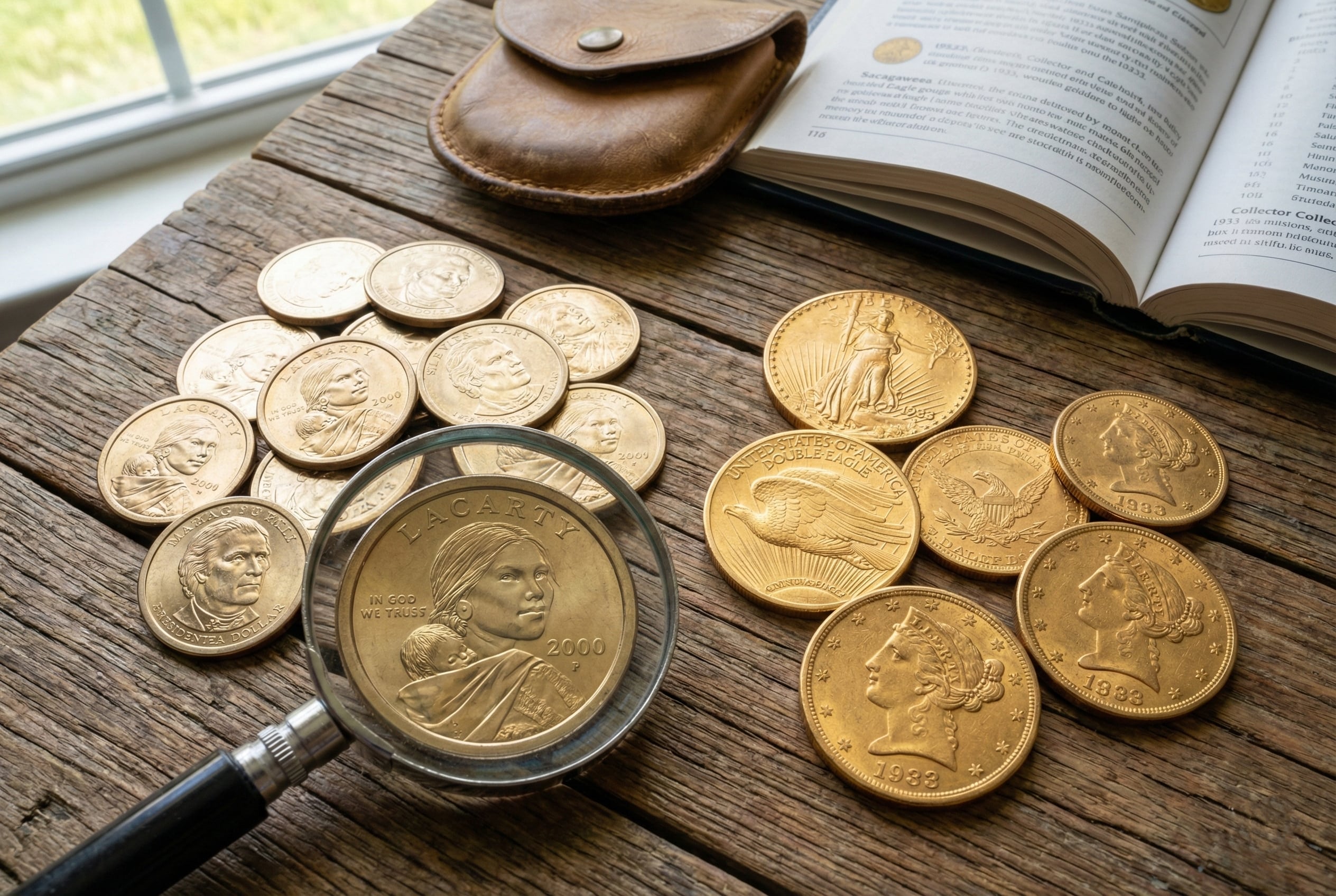
A coin’s soft gold shine can be misleading; not everything that looks like gold is gold—and not everything that isn’t gold is worthless. Modern golden dollars, rare mint errors, and the true gold coins of the nineteenth and early twentieth century all share this color, yet their stories couldn’t be more different. Those stories are what determine their value.
America once used real gold coins in daily commerce, and many people today unknowingly mistake them for modern golden dollars. Understanding these differences is the key to identifying the coins that are actually valuable.
Modern “Gold Dollar Coins” (2000–Present)
Most modern “gold” dollar coins you’ll see today come from three series:
Even though these coins look golden, they’re actually made from a copper core with a manganese-brass outer layer—chosen not for intrinsic value, but for durability and easy visibility in vending machines and cash-handling equipment.
Because the Mint produced hundreds of millions of them, especially in the early 2000s, the vast majority circulate at face value. Modern golden dollars were designed for spending, not collecting. High mintages, long production runs, and the absence of precious metal mean typical examples carry little or no premium—with the rare exception of a few special issues that break the pattern entirely.
Sacagawea Dollars Worth Noticing
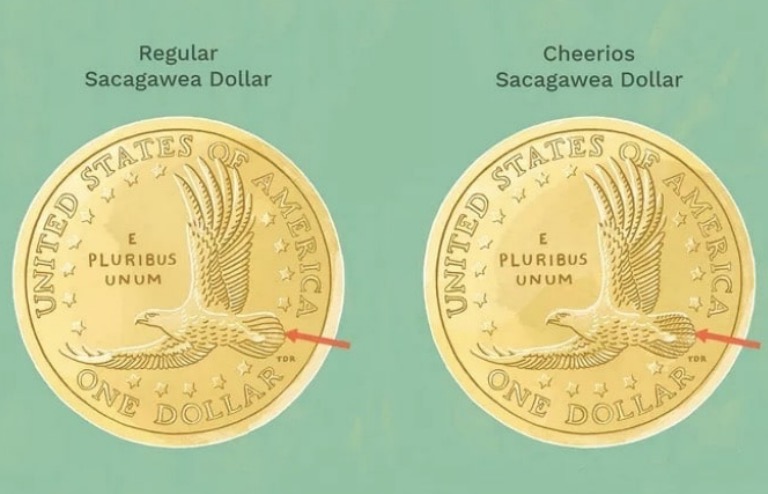
• 2000-P “Cheerios” Dollar
Distributed in cereal boxes, this early strike features enhanced eagle tail feathers. Scarce examples often sell for $3,000–$8,000.
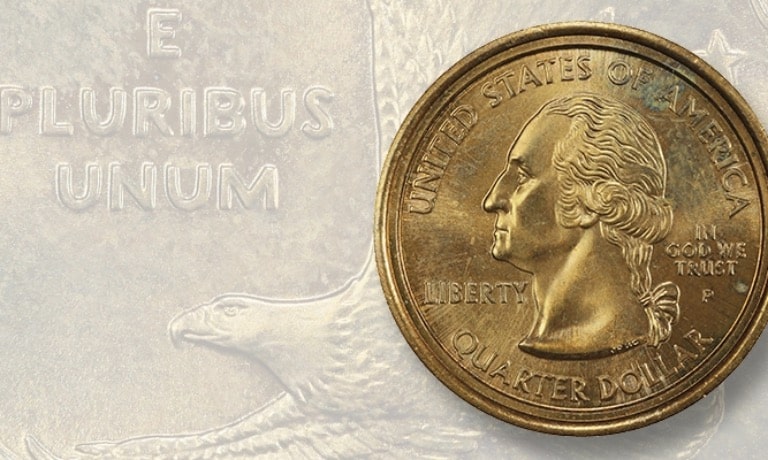
• Sacagawea–State Quarter Mule
One of the most famous modern U.S. errors, pairing a Washington quarter obverse with a Sacagawea reverse. These can reach $30,000–$200,000.
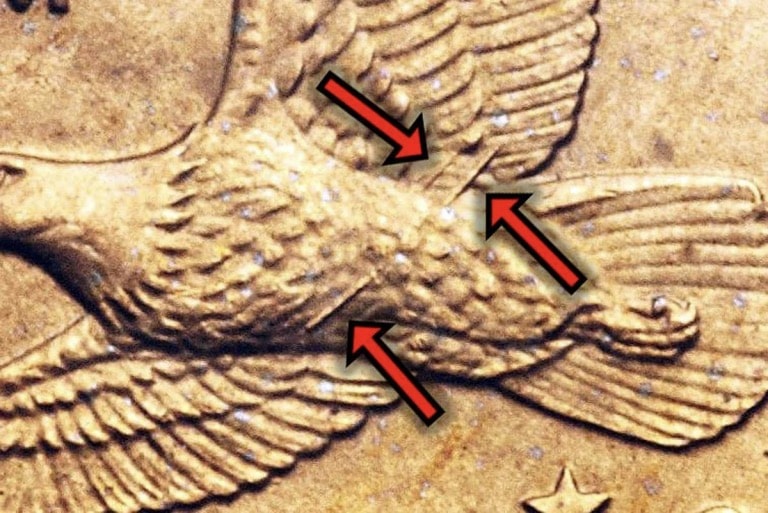
• “Wounded Eagle” Variety
A bold die gouge across the eagle’s body makes this variety worth $100–$500 depending on grade.
Although Sacagawea and Native American dollars are no longer widely released into circulation, the U.S. Mint still produces them each year for collectors, and new rolls can be purchased directly from the Mint or authorized distributors.
If your modern dollar appears unusually shiny or plated in real gold, it may be a privately gold-plated novelty piece. These items are not U.S. Mint products and carry no added collector value.
What Makes Presidential Dollars Interesting
The Presidential Dollar series (2007–2016) reintroduced edge lettering—a revival of early U.S. minting traditions. Because the lettering was added in a separate step, it created room for unusual and valuable errors:
-
Missing edge lettering
-
Double or overlapping text
-
Inverted or partial inscriptions
Most Presidential dollars are worth only $1, but error examples can bring $50–$600 or more. Among modern gold-colored dollars, only a few dates and varieties consistently carry premium value—mainly the 2000-P Cheerios Dollar, the Wounded Eagle variety, and the extremely rare Sacagawea Mule errors.
Modern dollars are fun to search through, but they’re only part of the story. To understand the coins with the greatest value, we have to look much further back.
The Real U.S. Gold Coins That Once Circulated (1795–1933)
Long before Sacagawea dollars existed, real gold coins moved through the hands of American workers, merchants, bankers, miners, and travelers. These coins weren’t commemoratives or bullion products—they were ordinary money, minted in 90% gold and used across the growing nation.
From 1795 to 1933, the United States Mint produced a complete system of gold currency, built on five denominations:
- the $1 Gold Dollar
- the $2.50 Quarter Eagle
- the $5 Half Eagle
- the $10 Eagle
- and the $20 Double Eagle
These coins were the backbone of the nation’s financial system. Today, they are some of the most desirable pieces in American numismatics.
The U.S. $1 Gold Dollar (1849–1889)
Created during the Gold Rush, the $1 gold coin was the smallest U.S. gold coin ever minted. About the size of a dime but thinner, it circulated widely through the mid-1800s.
Three major types exist:
-
Type 1 Liberty Head (1849–1854)
-
Type 2 Indian Princess, Small Head (1854–1856)
-
Type 3 Indian Princess, Large Head (1856–1889)
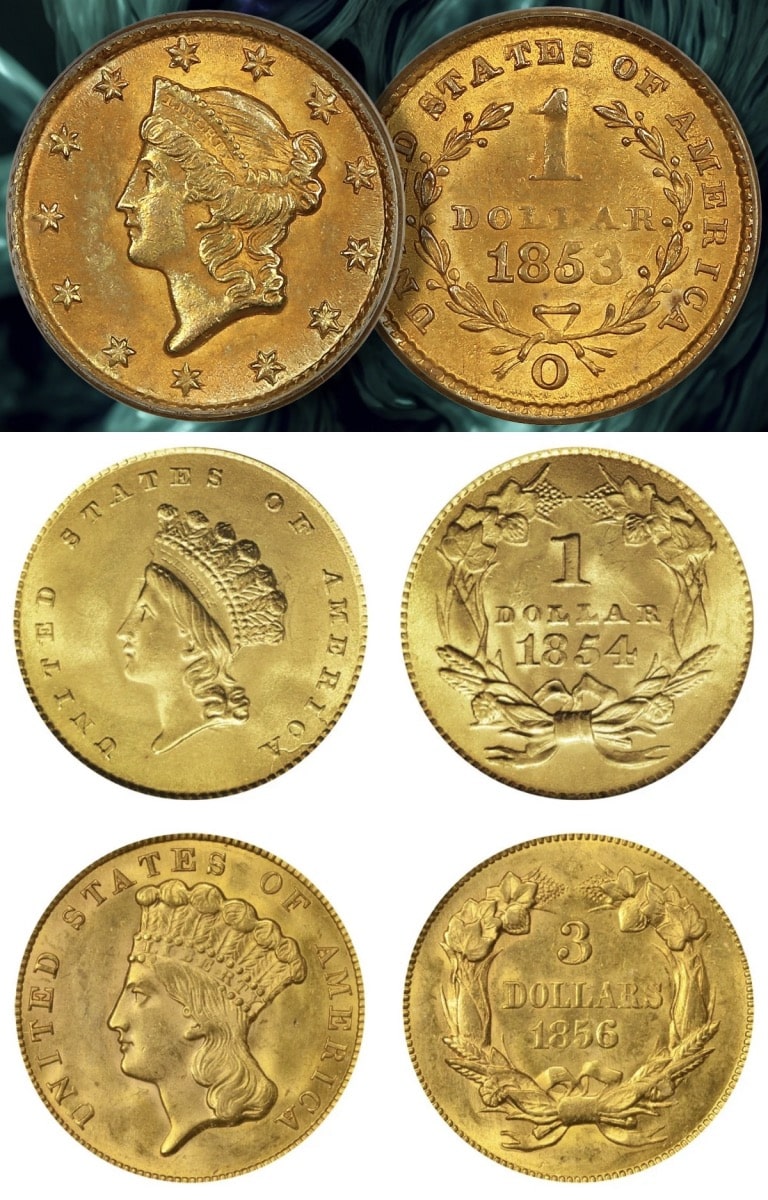
Despite its small size, the $1 gold coin can be extremely valuable. Common examples sell for a few hundred dollars, while rarities—especially Southern-mint issues like Dahlonega (D) or Charlotte (C)—can reach five figures.
The 1861-D remains one of the greatest small-coin rarities in U.S. history.
The $2.50, $5, and $10 Gold Coins: America’s Working Gold
If the $1 gold coin was a pocket piece, the $2.50, $5, and $10 gold coins were the workhorses of American commerce. These denominations flowed through banks, businesses, salaries, and payments across the expanding nation.
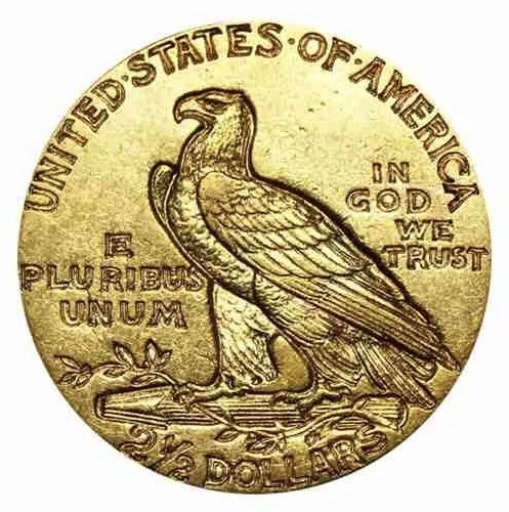
Quarter Eagles ($2.50)
These smaller gold pieces were popular for personal savings and modest transactions. Early issues from the late 1790s and early 1800s are surprisingly scarce today, while later Liberty and Indian Head designs still circulate actively in the collector market.
Half Eagles ($5)
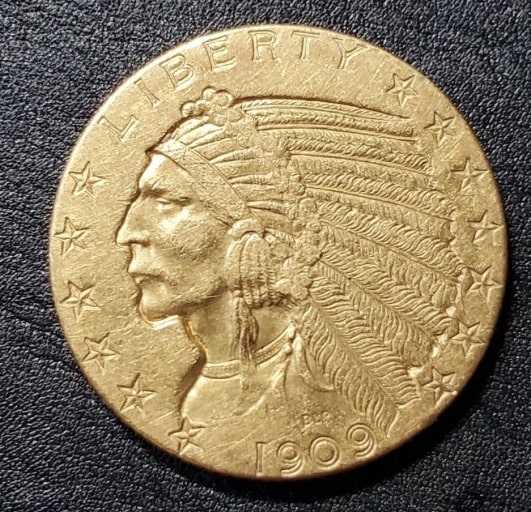
The Half Eagle holds a special distinction: it is the longest-running denomination in U.S. Mint history, struck continuously from 1795 to 1929. These coins played a central role in everyday commerce, especially in the South. As a result, coins minted in Charlotte (C), Dahlonega (D), and New Orleans (O) often bring substantial premiums due to their low surviving populations.
Eagles ($10)
Larger gold coins like the Eagle often traveled far beyond U.S. borders, acting as trusted currency in international trade. Early examples from the 1790s and 1800s represent some of the rarest and most historically meaningful U.S. coins ever produced.
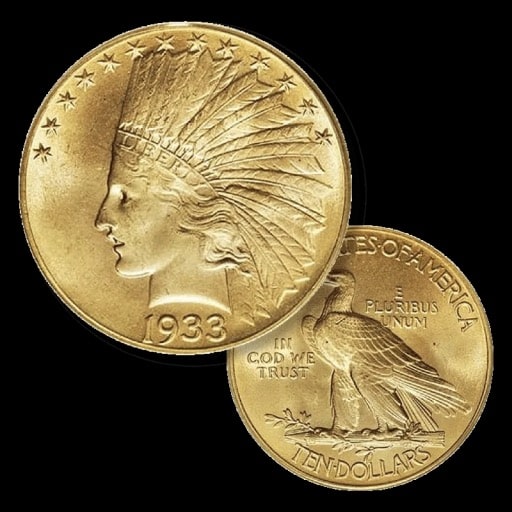
What makes these denominations especially compelling today is the range of values they can carry. Even common dates command strong premiums, while rare dates, mintmarks, and high-grade examples can soar into the tens of thousands.
The $20 Gold Double Eagle (1850–1933): An American Icon
If there is one coin that symbolizes American gold currency, it is the Double Eagle.
The $20 Double Eagle emerged directly from California’s Gold Rush, created to handle enormous quantities of newly mined gold. Its large size, satisfying weight, and high face value made it the coin of choice for major transactions, bank transfers, and international payments.
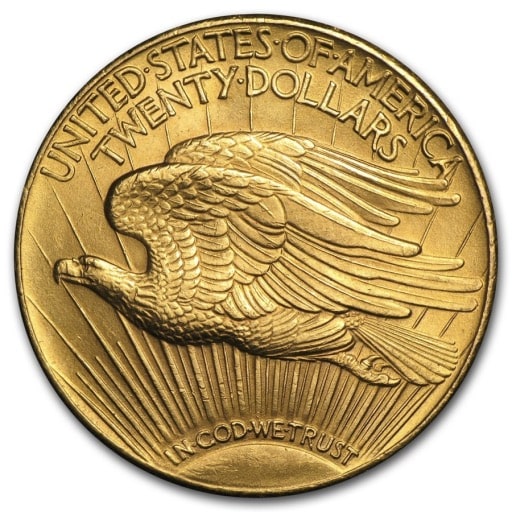
Two designs define the series:
-
Liberty Head (1850–1907) — formally elegant, deeply tied to America’s industrial rise
-
Saint-Gaudens (1907–1933) — a masterpiece of American art, often called the most beautiful coin ever struck
Today, the Double Eagle remains a cornerstone of gold-coin collecting. Common examples typically sell for a few thousand dollars, while rare dates and high-grade pieces can reach six figures.
The most famous of all, the 1933 Saint-Gaudens Double Eagle, is considered the holy grail of American coinage. One example sold for more than $18 million, making it one of the most valuable coins ever auctioned.
These real U.S. gold coins represent more than just precious metal—they are pieces of American history, shaped by wars, gold strikes, political upheaval, and economic transformation.
Foreign Gold Coins Denominated in “Dollars”
Not every gold coin marked with a “dollar” value comes from the United States. Around the world, several countries have issued gold coins that use the word dollar in their denomination, and these pieces often find their way into U.S. collections through travel, immigration, estate inheritances, or decades-old bullion purchases.
The most commonly encountered example is Australia’s $200 Koala gold coin, first issued in 1980.
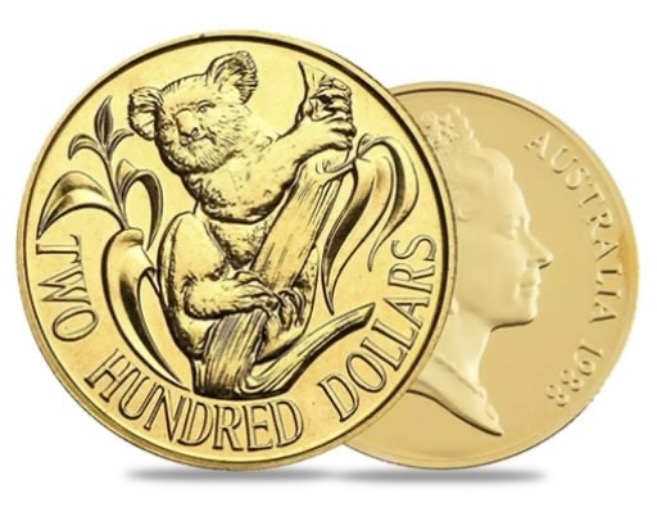
It contains real gold and was sold primarily as an investment product rather than a circulating coin. Their worth is tied to three main factors:
-
Gold content
-
Market gold price
-
Mintage and condition
Because their gold weight is printed directly on the coin, their minimum value equals their melt value—often $500–$1,500+ depending on the market.
They may not be tied to U.S. history, but they remain genuine and valuable gold assets.
FAQs
Are gold dollar coins made of real gold?
Modern golden dollars are not gold. Only U.S. coins minted before 1933 contain real gold.
What are the most valuable U.S. gold coins?
Most modern golden dollars are worth $1, but rare varieties like the Cheerios Dollar, the Wounded Eagle, and the Sacagawea Mule can be worth hundreds or even thousands. Pre-1933 U.S. gold coins hold the highest value.
Why is the 2000 Sacagawea dollar rare?
Only special versions like the Cheerios Dollar or the Sacagawea Mule are rare; regular 2000 coins are common.
How much is a 1980 $200 Koala gold coin worth?
Its value follows the gold market and usually equals its melt value or slightly above.
Should I grade my coin?
Grade pre-1933 gold coins or confirmed errors. Typical modern dollars usually don’t require grading.
Where can I sell valuable gold coins?
Use auction houses, reputable coin dealers, or bullion buyers. Avoid pawn shops.
Conclusion
Figuring out whether a gold-colored coin is valuable starts with understanding what you’re looking at. Real U.S. gold coins minted before 1933 have a richer tone, classic designs, and a weight that feels dense for their size, while modern alloy dollars are lighter and far more uniform.
Rare modern varieties—such as missing edge lettering, doubled inscriptions, unusual dies, or mule combinations—can carry strong premiums, so any coin that looks unusual deserves a closer look.
Foreign gold coins are generally the easiest to identify because they list their gold content on the surface; their melt value alone provides a clear baseline.
If your coin appears promising—an older gold issue, a potential error, or something in exceptional condition—grading through PCGS or NGC can unlock its full value by removing doubt and attracting serious buyers.
Once you know what you have, selling becomes about choosing the right venue: major auction houses for high-end pieces, reputable coin dealers for mid-range coins, and bullion dealers for foreign gold. Avoid pawn shops or generic gold-buying booths, which typically pay only melt value and overlook rarity.
With the right evaluation and selling channel, even a small gold dollar coin can turn out to be a surprisingly valuable piece of history.